
Azure Defence In Depth

In an age where data is the lifeblood of modern enterprises, securing your digital assets is paramount. As businesses increasingly transition to the cloud, cloud security becomes a top concern. Microsoft Azure, one of the leading cloud providers, recognizes the importance of robust security measures and offers a comprehensive approach known as “Azure Defense in Depth.” In this blog post, we will explore what Azure Defense in Depth is and how it can help protect your cloud infrastructure.
What is Azure Defense in Depth?
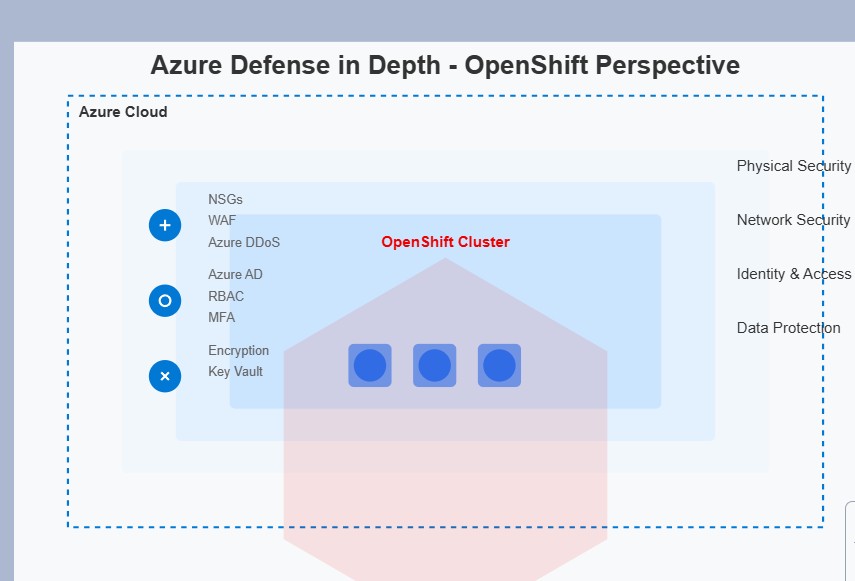
Azure Defense in Depth is a multi-layered security strategy designed to defend against a wide range of threats and attacks. This approach acknowledges that no single security measure is foolproof, so it combines multiple layers of security controls and practices to create a robust defense system. This ensures that even if one layer is breached, there are several others in place to thwart malicious activity.
The Layers of Azure Defense in Depth
Azure Defense in Depth consists of several layers, each providing a unique set of security measures:
1. Identity and Access Management (IAM):
The first layer focuses on controlling who can access your Azure resources. Azure Active Directory (Azure AD) is used to manage identities and enforce strong authentication methods. Role-based access control (RBAC) is employed to assign permissions and limit access to only those who need it.
2. Network Security:
Azure offers various network security tools, including Azure Firewall, Network Security Groups (NSGs), and Virtual Network Service Endpoints. These tools allow you to define and enforce network security policies, filter traffic, and isolate resources.
3. Data Protection:
This layer revolves around safeguarding your data. Azure offers encryption at rest and in transit, data classification, and data loss prevention (DLP) capabilities. Azure Key Vault helps manage and safeguard cryptographic keys and secrets.
4. Threat Detection and Monitoring:
Azure Security Center is at the heart of threat detection and monitoring. It continuously assesses your Azure environment, identifies potential security threats, and provides recommendations for mitigating risks. Azure Monitor and Azure Sentinel offer real-time monitoring and incident response capabilities.
5. Application Security:
To protect your applications, Azure provides tools like Azure Application Gateway, Web Application Firewall (WAF), and Azure API Management. These services help secure your web applications and APIs from common attacks like SQL injection and cross-site scripting (XSS).
6. Endpoint Security:
With the rise of remote work, endpoint security has become crucial. Azure Defender for Endpoints helps protect your devices and servers by detecting and responding to threats across your Azure and on-premises environments.
7. Identity Protection:
Azure AD Identity Protection uses machine learning and advanced security analytics to detect and mitigate identity-related risks. It can block suspicious sign-in attempts and enforce multi-factor authentication when necessary.
Benefits of Azure Defense in Depth:
- Comprehensive Security: By implementing multiple layers of security, Azure Defense in Depth offers comprehensive protection against a wide range of threats.
- Adaptability: Azure’s security measures can be customized to fit your organization’s specific needs and compliance requirements.
- Scalability: As your organization grows, Azure can scale with you, ensuring your security posture remains strong.
- Streamlined Management: Azure Security Center provides a centralized dashboard for managing and monitoring security across your Azure resources, making it easier to stay on top of potential risks.
- Cost-Efficiency: Azure’s pay-as-you-go pricing model means you only pay for the security services you use, reducing unnecessary costs.
Conclusion
In today’s digital landscape, cybersecurity is not a one-size-fits-all solution. Azure Defense in Depth acknowledges this reality and provides a robust and flexible framework for securing your cloud infrastructure. By implementing this multi-layered approach, you can significantly enhance the security of your Azure environment and protect your organization’s most valuable assets from threats and attacks. In a world where data breaches are an unfortunate reality, Azure Defense in Depth is your shield against the storm.



Post Comment